%2FKinvara%20Private%20Hospital%20logo.png&w=640&q=75)
Where to access this therapy
Deep Oscillation is not provided at Kinvara Private Hospital. To find out more, contact sisters Julie Soroczyn and Mary Fickling at PhysioPod® UK on 01159 167 685, email info@physiopod.co.uk, or visit physiopod.co.uk.
Lipoedema is a chronic, systemic loose connective tissue pathology almost exclusively affecting women, characterised by a symmetrical, disproportionate accumulation of abnormal subcutaneous adipose tissue in the limbs, hips, and buttocks.
For decades, women living with this condition have faced painful diagnostic delays, frequently being misdiagnosed with generalised obesity and left with the deep emotional frustration of traditional diets and exercise programmes failing to reduce their limb volume. Over time, the physical presence and pressure of this abnormal tissue can put mechanical strain on the body’s delicate lymphatic structures, making early, supportive care essential.
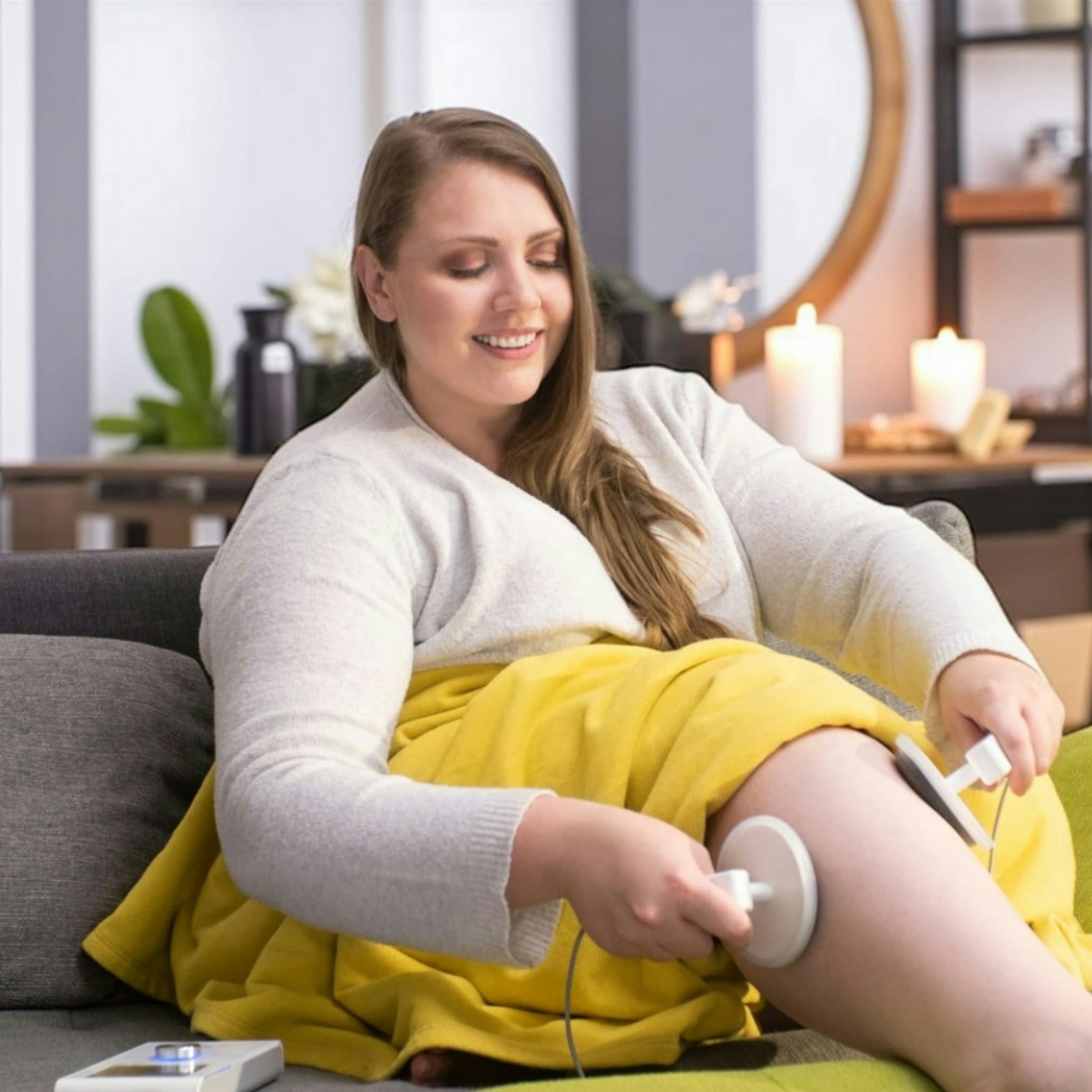
To promote tissue health directly, Deep Oscillation Therapy is a valuable option that Consultant Plastic Surgeon Mr Vasu Karri recommends lipoedema patients consider. Rather than a service provided in-house at the hospital, it represents an independent, highly flexible therapeutic pathway that can be delivered either by qualified therapists across the country using specialised gloved hands, or through portable, personal-use devices for empowered self-care at home via applicators. The therapy plays an integral role throughout the entire clinical journey, helping to soften and prepare tissues before surgery, expedite recovery afterward, and manage symptoms during daily self-care.
What Deep Oscillation is, and how it works
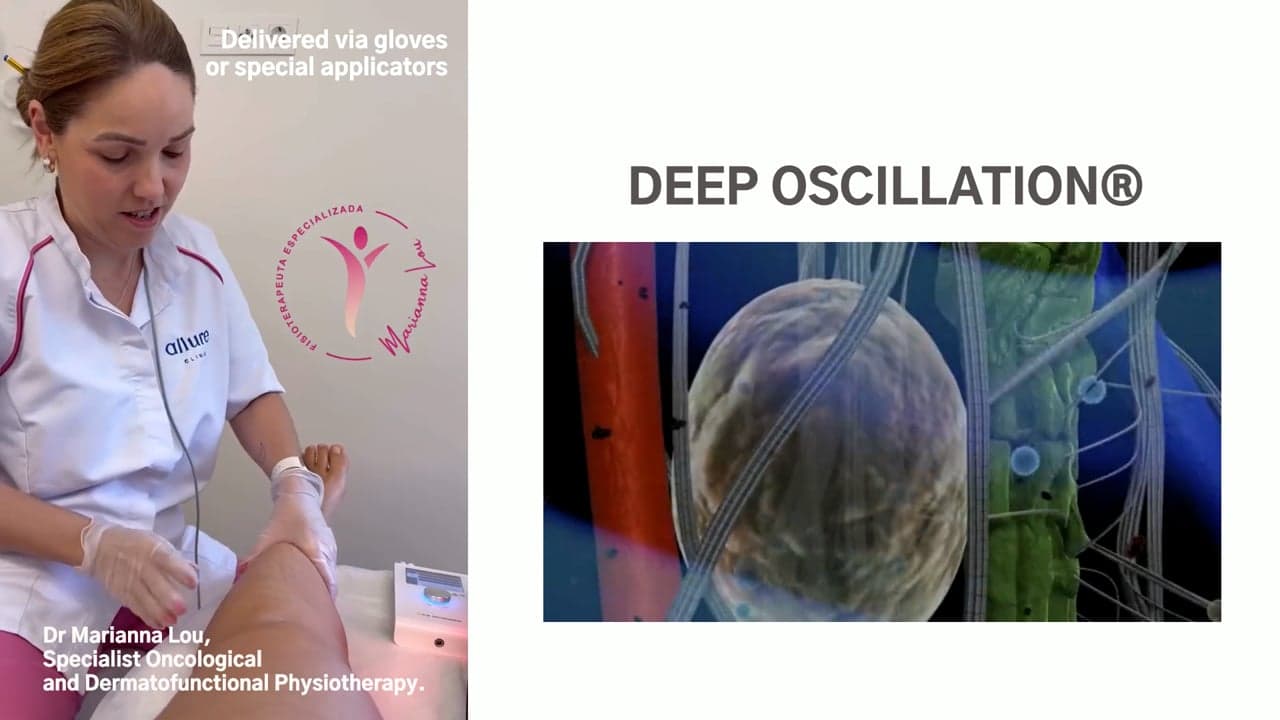
Video courtesy of PhysioPod® UK.
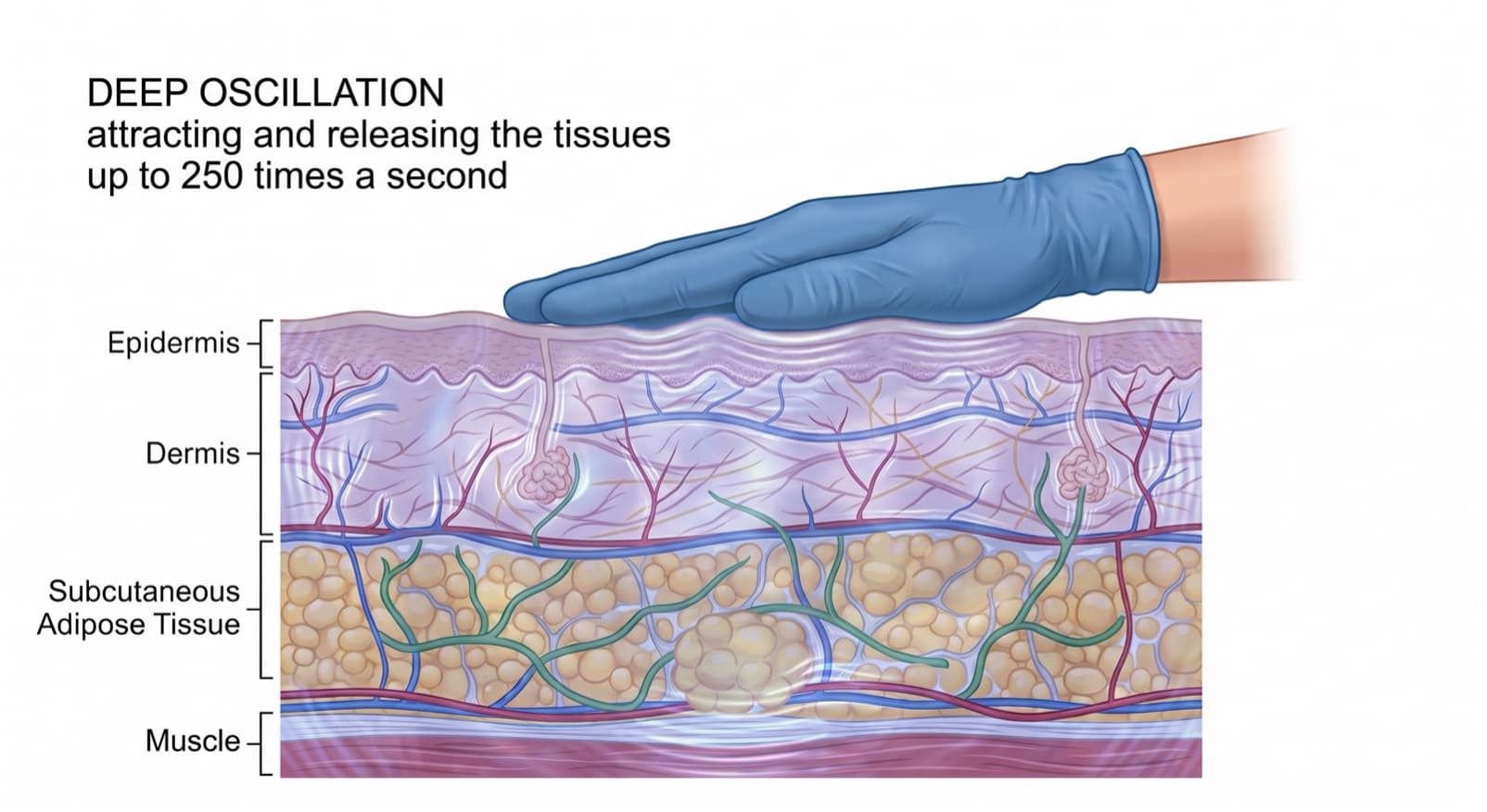
Deep Oscillation is a non-invasive physical therapy method that utilises a low-intensity, pulsed electrostatic interaction based on the biophysical phenomenon of the Johnsen-Rahbek effect to support the body’s natural healing and fluid drainage pathways. During treatment, a pulsed electrostatic field generates a gentle, pleasant attraction and release phenomenon within the tissue layers.
This rhythmic interaction induces gentle endogenous micro deformations: very small, highly localised microscopic changes in tissue shape and tension generated entirely within the tissue environment itself. Because this soothing interaction is generated internally within the tissue layers, the therapy operates with minimal mechanical load and requires no significant downward physical pressure. This design offers a gentle option with an excellent safety profile, making it well tolerated, even on highly sensitive, painful, or recently operated limbs.
Nurturing three distinct tissue states
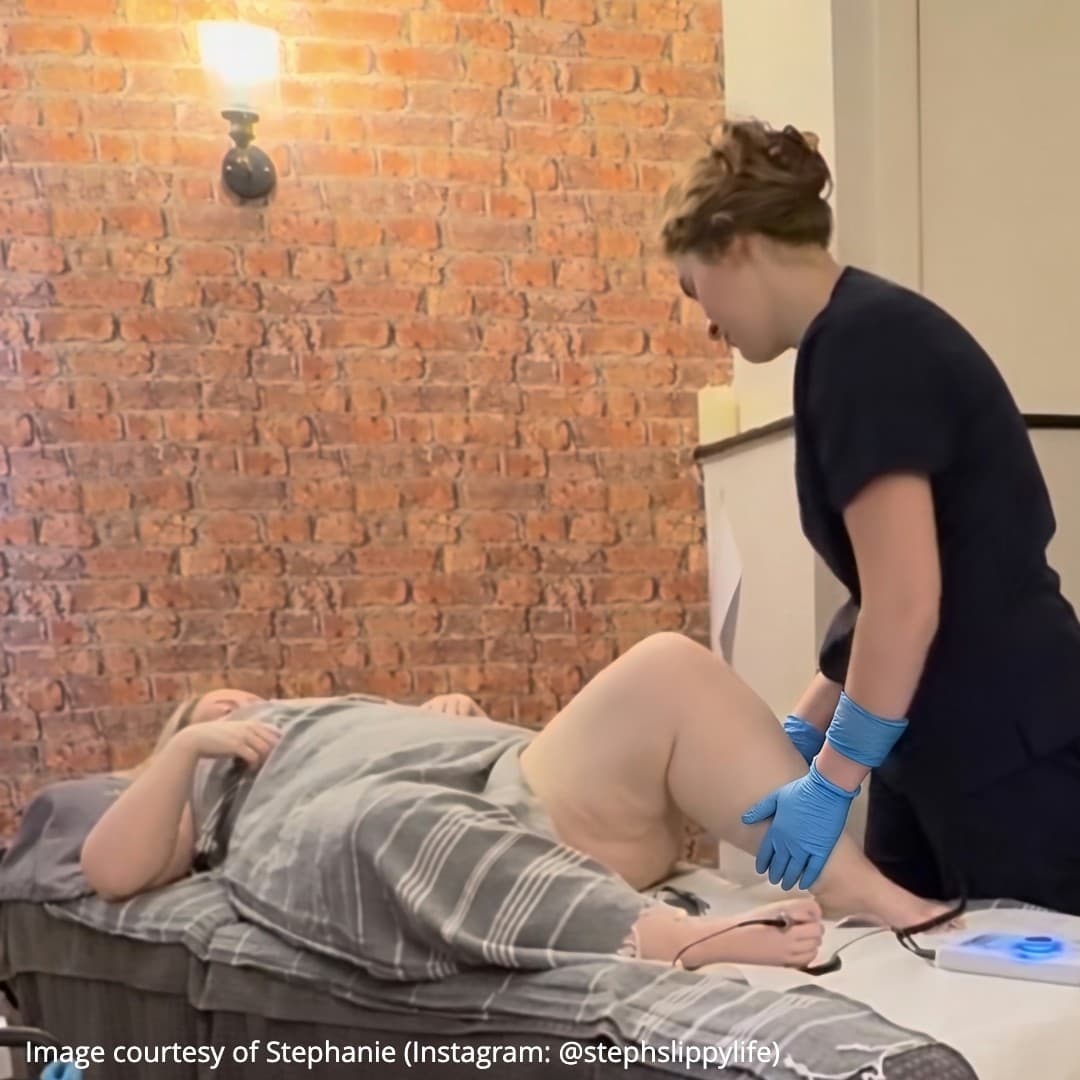
Lipoedema tissue involves complex microstructural changes, including extracellular matrix remodelling, microvascular fragility, and chronic low-grade tissue inflammation. To support highly individualised care, practitioners and patients can look directly at what the subcutaneous environment is experiencing currently, adapting treatment parameters to support three distinct tissue states.
Hypersensitive tissue
Need: comfort and pain modulation
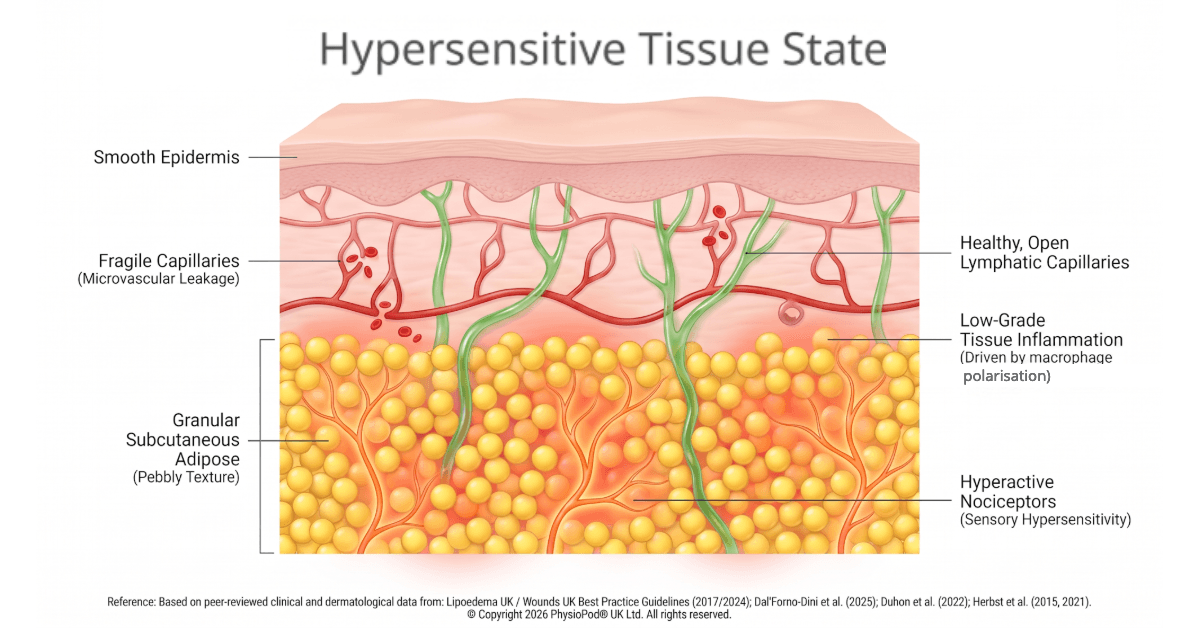
Low-grade inflammation and hyperactive pain receptors (nociceptors) drive easy bruising, heavy limbs, and pressure sensitivity. Utilising a clinically conservative strategy characterised by lower mechanical perception and less external mechanical load maintains deep physiological and mechanobiological interaction. These gentle electrostatic pulses soothe pain receptors, providing a biophysical interaction that can assist in soothing local sensitivity and make limbs feel lighter, softer, and more comfortable.
Congested tissue
Need: fluid flow and pliability
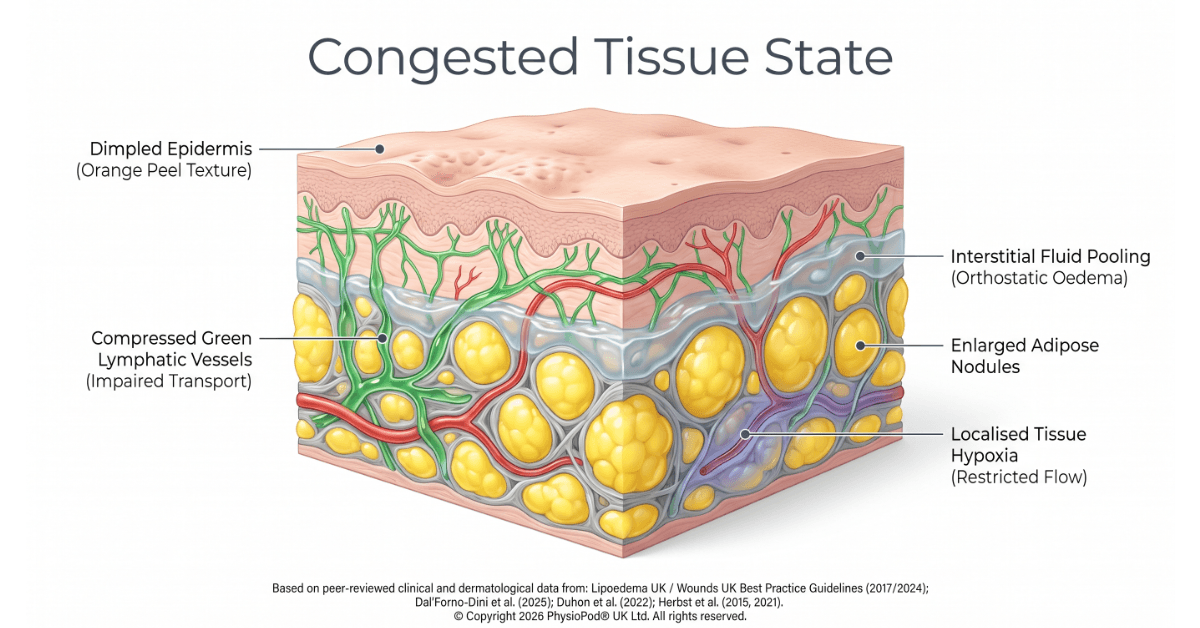
Where fluid clearance fluctuates, waste products can pool in the interstitial spaces, leading to localised tissue swelling (orthostatic oedema) and a deep-seated sensation of aching tightness. The gentle electrostatic pulses generate internal micro deformations that serve as a supportive clinical adjunct to standard manual lymphatic drainage. This rhythmic biophysical interaction is designed to facilitate the gentle reabsorption of stagnant fluid and assist in the softening of localised congestion, improving tissue pliability, easing the persistent sensation of limb fatigue and gravitational heaviness, and comfortably supporting local tissue trophicity and interstitial health.
Indurated tissue
Need: softening and mobility
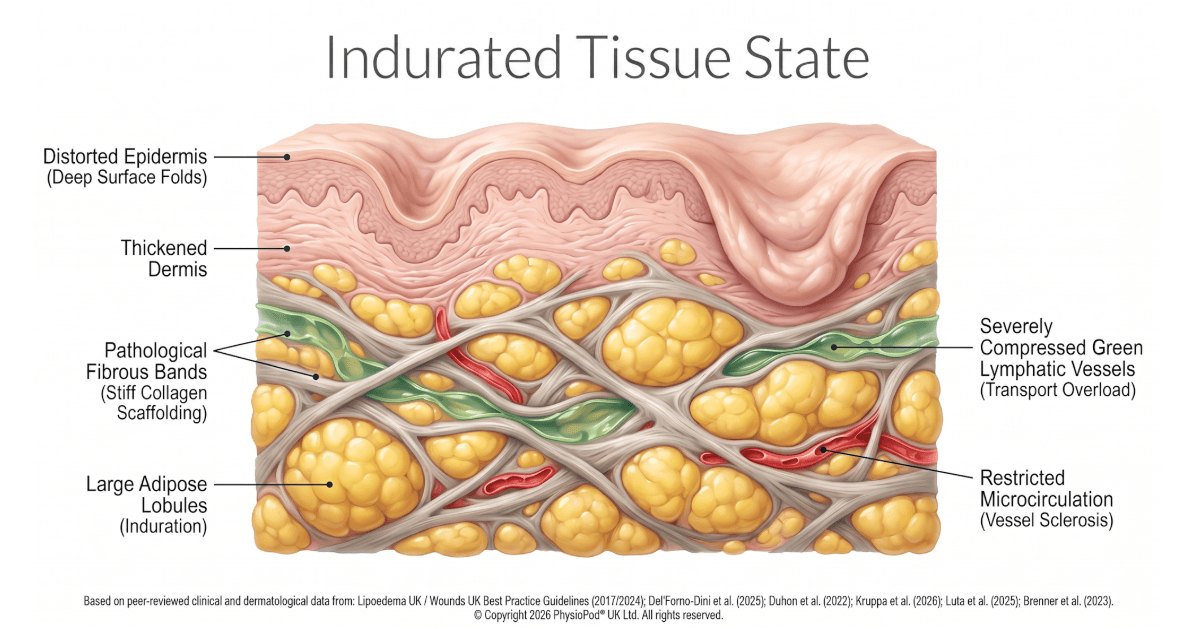
In advanced stages or when tissues are left unmanaged, chronic inflammation can trigger subcutaneous tissue thickening, known as pathological fibrosis. Connective tissue fibres become dense, stiff, and lose their natural elasticity, forming hard, palpable nodules that can limit mobility, restrict joint range of motion, and alter walking gait. Gentle electrostatic pulses comfortably target these deep-seated networks. This comfortable mechanical pacing is designed to support tissue softening, improve tissue pliability, and reduce stiffness in rigid subcutaneous zones that standard manual therapies cannot easily reach, restoring natural elasticity and assisting ease of movement.
Before and after lymph-sparing liposuction
For patients undergoing lymph-sparing liposuction, Deep Oscillation Therapy is often considered as a supportive adjunct to assist in protecting tissues and facilitating a smoother recovery. Prior to surgery, pre-operative Deep Oscillation may be utilised to help progressively soften tissues and promote overall tissue compliance. This prepares the limbs by enhancing structural elasticity, which subsequently assists in minimising mechanical tissue trauma during surgery, facilitating smoother cannula passage, and protecting delicate, vulnerable lymphatic pathways.

I recommend Deep Oscillation for pre-operative preparation for Lipoedema liposuction in all Stage 3 and selected Stage 2 Lipoedema sufferers because I find the deep oscillation softens the fibrosis, with less bleeding, less complications and quicker recovery.
Mr Vasu Karri · Consultant Plastic Surgeon
Early Post-Op Integration
Safely integrated into acute care (with surgical clearance) to support early recovery across three specific goals:
- Accelerated decongestion. Gentle electrostatic pulses assist in the rapid reabsorption of acute post-surgical swelling and deep bruising.
- Surgical comfort. Rhythmic biophysical interaction soothes overstimulated pain receptors, helping patients to mobilise earlier and with greater ease.
- Proactive scar modulation. Early biophysical interaction supports tissue pliability at the incision sites, helping to prevent restrictive scar adhesions and ensuring recovering limbs heal with optimal softness and elasticity.
The wider self-care framework
Managing lipoedema requires a collaborative, multidisciplinary approach addressing both physical symptoms and the psychosocial burden. Physical therapies combine manual lymphatic drainage, custom flat-knit compression and daily skincare to manage tissue health. Surgical options include lymph-sparing liposuction to reduce tissue bulk, improve joint range of motion and support body alignment. Metabolic support uses anti-inflammatory and low-carbohydrate or ketogenic diets to manage systemic inflammation and soothe pain.